🇩🇲 Moving to Dominica from the UK
The Commonwealth of Dominica is the Nature Island of the Caribbean: 750 square kilometres of rainforest, volcanic peaks and rivers in the Eastern Caribbean. Not to be confused with the Dominican Republic, which is a different country.
Independent since 3 November 1978 and a parliamentary republic since the same day, Dominica is one of the smallest countries in the Americas and one of the greenest. The capital is Roseau, on the south-west coast in Saint George parish. For the Dominican Diaspora in the UK, US and Canada, this guide gives you what you need to decide honestly: citizenship, real cost of living, healthcare, property, banking and the practical first steps. Dominica is also one of the four countries currently in the Caribbean’s new Enhanced Full Free Movement pilot, and that has real consequences for what your passport carries; the citizenship section explains it.
Identity and Culture
Before the practicalities, this is the place. Its symbols, its sound, its flavour. Dominica is one of the most culturally distinctive small countries in the Caribbean: home to the Kalinago, the only surviving indigenous Carib people in the Eastern Caribbean, alongside a deep Afro-Caribbean and Creole culture, with French Creole (Kweyol) spoken widely beside English.
National Flag
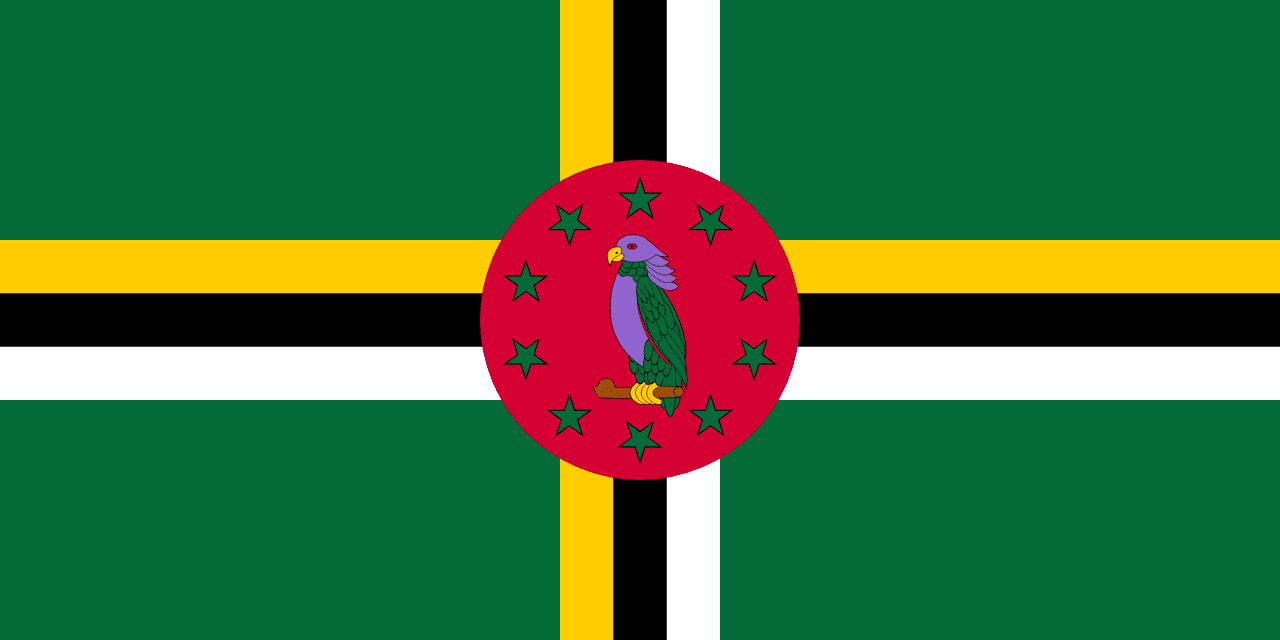
Adopted at independence on 3 November 1978 (modified 1988). A green field (the rainforest) with a central cross of yellow, black and white stripes representing the three peoples of Dominica (the Kalinago, the African-descended population, and the European-descended population), the soil, and the rivers. At the centre, a red disc carries ten lime-green stars (the ten parishes) around a Sisserou parrot, the national bird, found nowhere else on Earth.
Coat of Arms
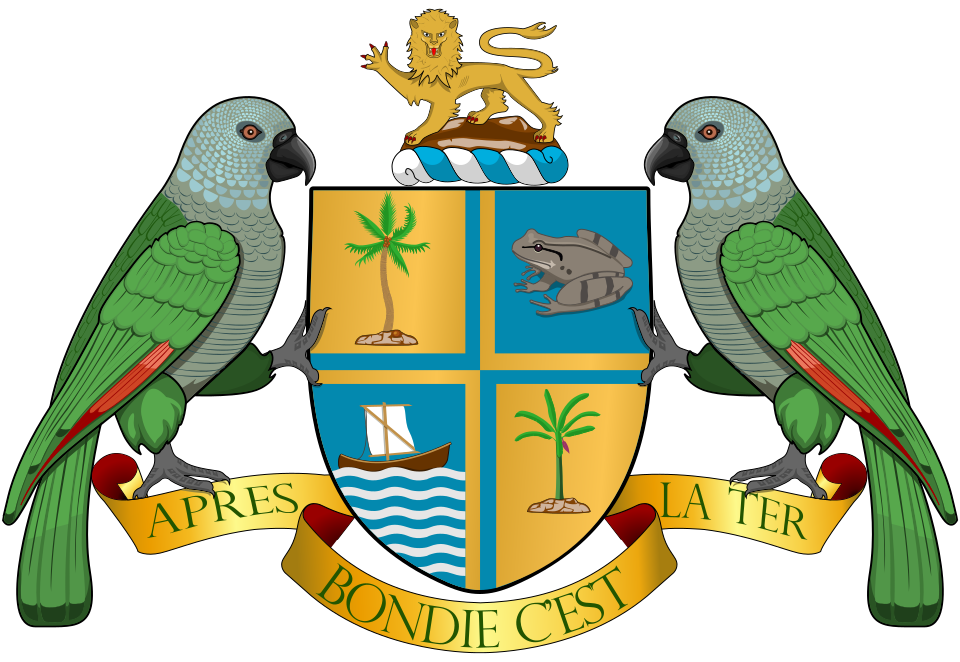
Adopted 21 July 1961. The shield bears a Sisserou parrot, a coconut palm, a banana tree and a frog, supported by two Sisserou parrots. The motto sits on a scroll below.
National Motto
"Apres Bondie, C'est La Ter."
Kweyol for "After God, the Earth," reflecting Dominica's deep connection to its rainforest, rivers and volcanic land. The motto is rendered in Kweyol rather than English; it tells you something about who Dominicans are.
Seat of Government
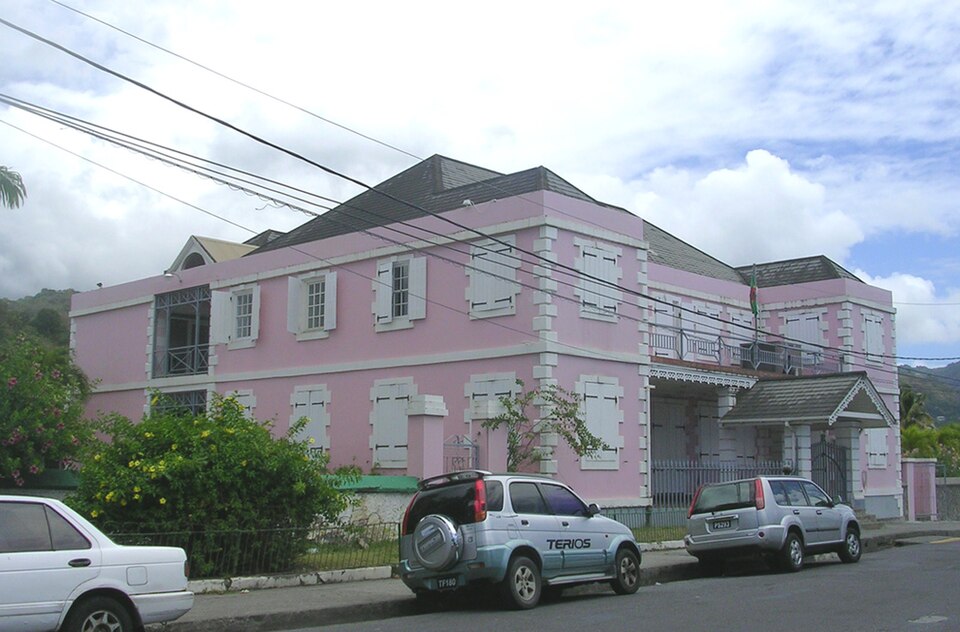
Parliament sits at the House of Assembly in Roseau; the President's official residence is the State House on Victoria Street, Roseau.
National Anthem
"Isle of Beauty, Isle of Splendour."
Lyrics by Wilfred Oscar Morgan Pond, music by Lemuel McPherson Christian. Adopted at independence in 1978.
National Dish
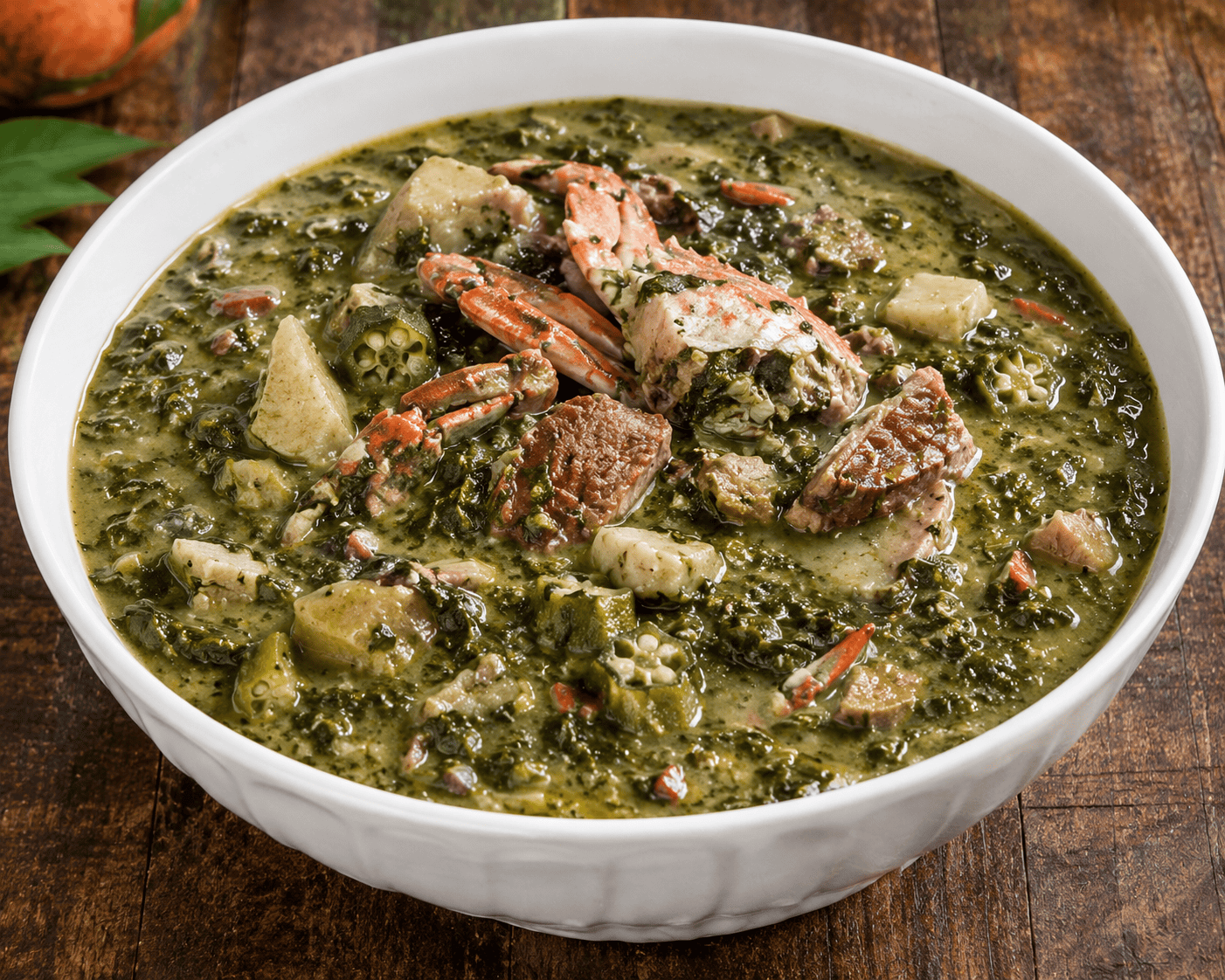
The traditional national dish has historically been mountain chicken (crapaud), but the giant ditch frog is now critically endangered and protected; you will not see it on menus or in homes. The everyday national dishes today are callaloo soup (made from dasheen leaves with coconut milk, taro and crab or saltfish) and a Sunday one-pot of provisions, dumplings and salt-meat. Saltfish and bakes is the universal breakfast. Cocoa tea, made from local cocoa sticks and warm spices, is a quiet national obsession.
Did You Know
Dominica is divided into 10 parishes. Saint George (south-west) contains the capital Roseau and is the most populous parish. Saint John (around Portsmouth, the second-largest town) and Saint Joseph (with the Layou River, the longest on the island) sit on the leeward side. Saint Andrew (north-east) is the largest by land area. The country is also home to the Kalinago Territory in Saint David, an internationally significant 3,700-acre area set aside in 1903 for the surviving indigenous Carib (Kalinago) people, with around 3,000 residents across eight hamlets and a Chief elected from within the community.
Country Code: the 767
+1 767. Across the Caribbean and the Diaspora, many Dominicans identify themselves simply as "the 767," after the country's telephone area code. You will hear it at the World Creole Music Festival in Roseau, on Independence Day floats, on Diaspora WhatsApp groups, and at any Dominican gathering in Crawley, Brooklyn or Toronto. Saying "I’m from the 767" is saying "I’m from home."
The most played songs in Dominica, updated daily. Chart data via Apple Music.
Tap any track for a preview, or open in Apple Music for full playback.
Leadership: Who Runs the Country
Dominica is a parliamentary republic, not a monarchy. King Charles III is not the Head of State. The country broke with the Crown at independence on 3 November 1978 and has had a President as ceremonial Head of State ever since. The National Assembly (House of Assembly) has 32 seats: 21 elected representatives, 9 appointed senators, the Speaker and the Attorney-General.
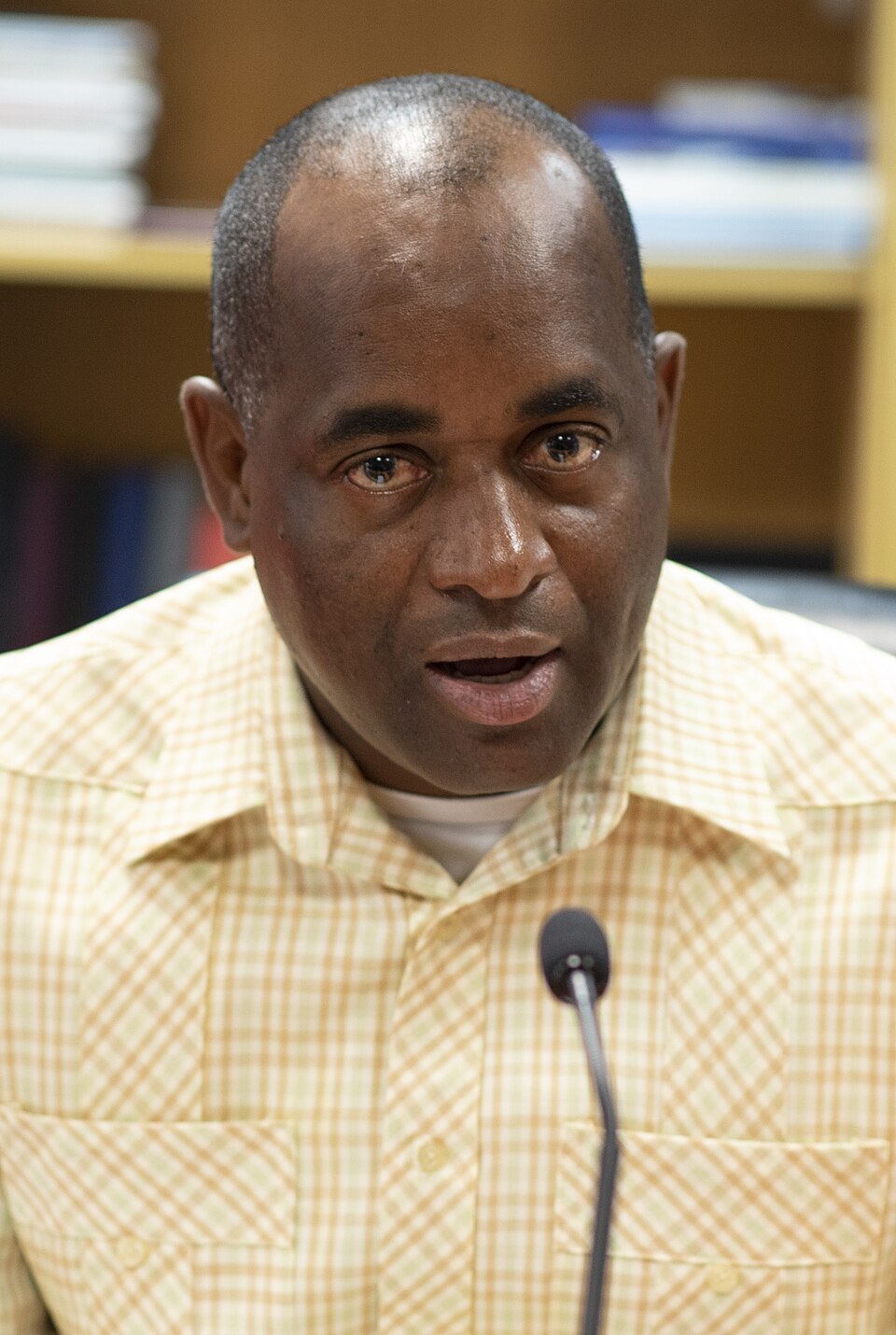
As of 2026, Dominica is a parliamentary republic — it has had no British monarch as head of state since independence in 1978. The ceremonial head of state is President Sylvanie Burton, the country's first female and first Kalinago (Indigenous) president, in office since 2023, while executive power rests with the Prime Minister, Roosevelt Skerrit, who has led the Dominica Labour Party government since 2004 and is now the region's longest-serving elected leader. The result is a stable, long-continuity administration, a Westminster-style parliament and English common law — familiar ground for anyone arriving from the UK.
Citizenship and Passport Eligibility 4-Region
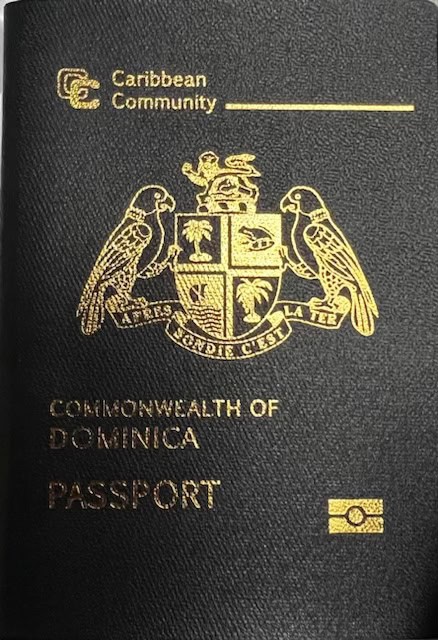
This is a strong picture for the Dominican Diaspora. Dominica recognises dual citizenship for descent and birth, runs one of the oldest and best-respected Citizenship by Investment programmes in the world, and the Dominican passport now carries one of the deepest free-movement benefits in CARICOM via the October 2025 pilot.
The routes, honestly
- By descent through a parent, the standard Diaspora route. A person born outside Dominica is entitled to Dominican citizenship by descent if at least one parent was a Dominican citizen at the time of the birth. Documented through the Dominica High Commission in London, the Consulate in New York, or directly with the Ministry of National Security and Home Affairs in Roseau.
- By marriage, available to the foreign spouse of a Dominican citizen, with a residence qualifying period.
- By registration / naturalisation, typically after a qualifying period of legal residence.
- By investment. Dominica has run a Citizenship by Investment (CBI) programme since 1993, one of the oldest in the world. The two routes are the Economic Diversification Fund (EDF) at US $200,000 for a single applicant (one-time contribution to the government fund) and an approved real estate option at US $200,000 (held for a minimum period). Family applications scale higher. Due diligence is rigorous and the programme is regularly reviewed by EU and US partners.
On 1 October 2025, Dominica, Barbados, Belize and St Vincent and the Grenadines launched Enhanced Full Free Movement among themselves. As a Dominican national you now have the right to enter, leave, re-enter, live, work and reside indefinitely in any of these four countries, with no work permit and no CARICOM Skills Certificate required. You can bring your spouse, children and certain other dependants, and access certain health and education services in the host country.
This is the deepest free-movement arrangement anywhere in the Caribbean today. It is similar in shape to EU free movement, though intergovernmental rather than supranational.
Outside the four-country pilot, your Dominica passport gives you the standard CSME rights across the other CSME-participating CARICOM states (the Bahamas does not participate in the CSME; Montserrat and Haiti are also outside the free-movement framework). The five freedoms cover goods, services, capital, the right of establishment and the free movement of skilled persons. The CARICOM Skills Certificate covers 13 wage-earner categories. Processing in five to eight weeks.
Where to apply, by region
| From | Where to enquire |
|---|---|
| United Kingdom | Dominica High Commission, 1 Collingham Gardens, London SW5 0HW. The London HC also covers continental Europe. |
| USA | Consulate-General of Dominica, New York. Embassy/Mission in Washington D.C. (small staffing). Honorary Consuls in additional US cities. |
| Canada | Honorary Consul of Dominica in Toronto and Ottawa; consular work is co-ordinated through New York and London. Dominica does not have a resident High Commission in Canada. |
| Europe | Embassy of Dominica in Brussels (mission to the European Union). Honorary Consuls in several European capitals. The London High Commission handles much of the European consular work. |
| In Dominica | Ministry of National Security and Home Affairs, Roseau; Immigration Department; for descent and birth-registration matters, the Registrar of Births, Deaths and Marriages. |
For descent applications, the long-form birth certificate of your Dominican parent is essential, properly Apostilled if issued abroad. Names and dates must match across generations; a difference in spelling can hold up the application and may require a sworn Affidavit. Reissue any short-form or photocopied certificates before you file.
Residence and citizenship routes (2026). Dominica is unusual among these guides in offering a long-established Citizenship by Investment (CBI) programme, running since 1993. The donation route — a contribution to the Economic Diversification Fund — starts at US$200,000 for a single applicant (around US$250,000 for a family), while an approved real-estate investment from US$200,000 plus government fees is the alternative. There is no mandatory residency period to obtain citizenship, and the Dominican passport carries wide visa-free access. For those who simply want to live there, ordinary residence and work-permit routes also exist. CBI due-diligence has tightened across the region, so expect thorough background checks and use only a government-authorised agent.
Cost of Living 4-Region
An honest monthly comparison: your home city versus life in Dominica, in your own currency. Dominica is among the more affordable countries in the Eastern Caribbean: lower than Barbados, lower than St Lucia, and generally on a par with St Vincent. Roseau is the most expensive area; the parishes are cheaper.
| Monthly expense | London £ | New York $ | Toronto C$ | Dominica (USD equivalent) |
|---|---|---|---|---|
| Rent, 1-bed local-standard, Roseau / Portsmouth | £2,000 | $3,800 | C$2,400 | ~$300 to $500 USD |
| Rent, 1-bed expat-standard, sea-view (Roseau / Mero / Calibishie) | £2,300 | $4,200 | C$2,800 | ~$700 to $1,200 USD |
| Single person, modest lifestyle (all in) | £3,000 | $4,800 | C$3,800 | ~$1,200 to $1,800 USD |
| Couple, comfortable lifestyle (all in) | £3,800 | $6,500 | C$5,200 | ~$2,200 to $3,500 USD |
| VAT (Value Added Tax) on most goods and services | 20% | Varies | 13% | 15% |
If your priority is keeping costs low while still being in a stable English-speaking jurisdiction with full free movement rights across four CARICOM countries, Dominica is among the strongest options in the region. Local produce is plentiful and cheap from Saturday markets; imported food, fuel and electricity (mainly from heavy fuel oil generation, though geothermal is coming) push the bill up. Geothermal power coming online in the next few years is expected to lower the electricity bill significantly.
The honest budget picture. Dominica is one of the most affordable destinations in this series: a single person can live comfortably on roughly US$1,500–2,200 a month, well below Barbados or The Bahamas. Local produce, fish and a strong agricultural base keep food costs down, and housing outside the capital, Roseau, is inexpensive. The trade-off is that the ‘Nature Isle’ is less developed — fewer imported conveniences, a smaller retail and dining scene, and some goods shipped in at a premium. For families and retirees who prize a quieter, greener, lower-cost life over big-island amenities, that balance is precisely the appeal.
Housing and Property
As a Dominican citizen you can buy and own land and property freely. Non-Dominicans need an Alien Landholding Licence (ALHL) for purchases above a small threshold (typically half an acre of residential land, or one acre of commercial), administered by the Cabinet through the Ministry of Legal Affairs; ALHL fees are typically 10 percent of the land value, which is a real cost to factor in if you are buying as a non-citizen. CBI-approved real estate purchases are exempt.
Where returnees tend to settle
- Roseau and the Roseau Valley (Saint George), the capital and the country’s commercial heart. Established residential areas include Goodwill, Bath Estate, Stockfarm, Wall House, and the higher elevations of Morne Bruce; the Roseau Valley (Trafalgar, Wotten Waven) sits inland and is popular with returnees who want greenery, rivers and proximity to the Boiling Lake trailheads.
- Portsmouth (Saint John), the second-largest town, on the deep natural harbour of Prince Rupert Bay. The seat of Ross University School of Medicine in pre-Maria days (Ross relocated to Barbados after 2017); now home to All Saints University of Medicine. A strong returnee and overseas-student community.
- Calibishie and the north coast (Saint Andrew), an established expat and Diaspora area for sea-view villas, near the Red Rocks coast and the small Melville Hall (now Douglas-Charles) airport.
- Mero, Salisbury and the west coast (Saint Joseph), the leeward coast running north from Roseau, with calmer Caribbean Sea swimming, a mix of long-established villages and a quieter returnee community.
- Marigot and Wesley (Saint Andrew), the north-east, traditional Methodist communities with strong UK Diaspora ties.
- Berekua / Grand Bay (Saint Patrick), the cultural heartland of the south-east, the historic centre of Dominican music and Carnival; a strong community feel.
- The Kalinago Territory (Saint David) is owned communally by the Kalinago people; land cannot be bought by outsiders. The Territory is a living indigenous community with eight hamlets.
Hurricane Maria (Cat 5, 18 September 2017) devastated Dominica, damaging or destroying around 90 percent of housing on the island. The recovery has been substantial but uneven; older non-hurricane-standard housing remains a concern in parts of the country. Since 2018 the country has pursued an explicit "Climate Resilient Nation" policy, with stronger building codes and a national rebuild programme. When buying or renting, ask honestly what hurricane standard the property meets and whether it was rebuilt or retrofitted since 2017. The Atlantic hurricane season runs 1 June to 30 November; the Office of Disaster Management (ODM) issues alerts.
Healthcare
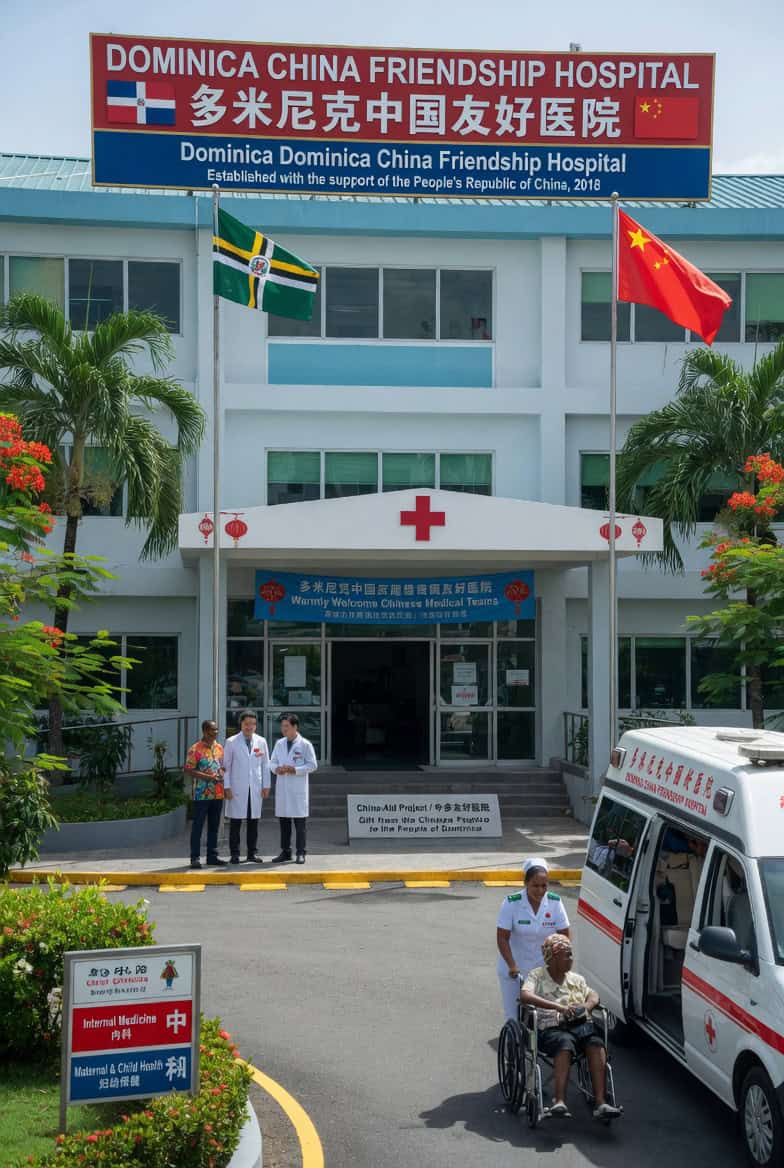
Healthcare in Dominica is run by the Ministry of Health, Wellness and Social Services, with public hospitals, district health centres and a growing private sector. The public system is largely free at the point of use for citizens; most returnees layer a private policy on top because the public system is genuinely stretched and complex specialist care still often means a flight to Martinique, Guadeloupe, Barbados, the US, or the UK.
Main hospitals and facilities
- Dominica China Friendship Hospital, Roseau (formerly Princess Margaret Hospital): the national referral hospital, rebuilt after Hurricane Maria with Chinese support and re-opened in stages from 2019 to 2023 with substantially expanded capacity (roughly four times the bed count of the old Princess Margaret). Emergency, surgical, paediatric, maternity, diagnostic and growing specialist services.
- Portsmouth Hospital (Saint John): the regional hospital serving the north of the island.
- Marigot Hospital (Saint Andrew): the regional hospital serving the north-east.
- Grand Bay Hospital (Saint Patrick): a smaller regional facility serving the south-east.
- Castle Bruce Health Centre serves the Kalinago Territory and the central east coast.
- Private practice and clinics: a growing private GP and specialist sector in Roseau and Portsmouth, often the first stop for returnees with private cover.
For older returnees
If you are returning at retirement age, plan three things before you travel. Arrange private health cover with strong medical-evacuation cover before arrival, since cover taken out later costs more and access to specialist care often means travel to Martinique, Guadeloupe, Barbados, the US or the UK. Bring a full written record of your medical history and current prescriptions so a local doctor can continue your care without gaps. And check that any long-term medication you depend on is reliably available locally; build redundancy through a UK pharmacy if needed.
For complex specialist care (advanced cardiac surgery, oncology, neurosurgery, advanced neonatal), Dominicans very commonly travel to Martinique (CHU de Fort-de-France) or Guadeloupe (CHU de Pointe-à-Pitre) under regional medical-transfer arrangements, or to Barbados (QEH), or to the US (Miami) or the UK. Build medical evacuation into your insurance from day one. The two French départements next door are a real practical resource.
What cover you need. Dominica's main facility is the Dominica-China Friendship Hospital in Roseau (formerly the Princess Margaret Hospital), an 800-bed hospital handling most general and emergency care, backed by district health centres. Services are more limited than on the larger islands, and for complex or specialist treatment residents are often referred to Martinique, Guadeloupe or Barbados. Primary care is provided to citizens at little or no cost, but relocating expats should hold comprehensive private health insurance that includes medical evacuation — on a smaller island, evacuation cover is a practical necessity rather than a luxury.
Education and Schools
Education in Dominica is free and compulsory between ages 5 and 16. The system is British-modelled in structure, with primary covering Kindergarten and Grades 1 to 6, secondary covering Forms 1 to 5 (ages 11 to 16), and sixth form / community college for ages 17 to 18. At the end of secondary, students sit Caribbean Examinations Council (CXC) qualifications: the Caribbean Secondary Education Certificate (CSEC), broadly comparable to GCSE; sixth-form students sit the Caribbean Advanced Proficiency Examination (CAPE), comparable to A-levels.
Well-regarded schools
- Dominica Grammar School (DGS, Roseau), the country’s oldest secondary, founded 1893. Co-educational.
- St Mary’s Academy (SMA, Roseau), the Catholic boys’ school, founded 1932, run by the Christian Brothers.
- Convent High School (CHS, Roseau), the Catholic girls’ school.
- Wesley High School (north-east) and Portsmouth Secondary School (north): the leading secondaries outside Roseau.
- Castle Bruce Secondary School, the secondary serving the Kalinago Territory and central east coast.
- The Dominica State College (DSC, Roseau), the country’s national tertiary institution, offering associate degrees and a sixth-form-equivalent path; with UWI Open Campus presence in Roseau for full undergraduate degrees.
- All Saints University School of Medicine (Roseau): an offshore American medical school. Ross University School of Medicine, long based in Portsmouth, relocated to Barbados in 2018 following Hurricane Maria.
Public schooling is free but families typically pay for uniforms, books and a small registration fee. The Catholic secondaries (SMA, CHS) charge modest annual fees and have competitive admission. Older returnees with university-aged children typically plan UWI (Cave Hill in Barbados, Mona in Jamaica, St Augustine in Trinidad), the Dominica State College plus transfer, or UK/US/Canadian universities.
Banking, Tax and Money
A few registrations matter for every returning resident settling in Dominica.
The tax picture, honestly
Dominica’s tax system is moderate by Caribbean standards. Personal income tax for residents is charged in bands rising to 35 percent above a basic personal allowance of around EC $30,000, on local-source income; foreign-source income for residents (including pensions) is generally not taxed in Dominica. Value Added Tax (VAT) at 15 percent applies to most goods and services (with some exemptions). There is no capital gains tax on real estate and no property transfer tax on land sales; the seller pays a 2.5 percent stamp duty and the buyer pays around 4 percent in stamp and assurance fees on the transaction. A small municipal tax of about 1.25 percent of assessed value applies to property in the largest urban centres (Roseau, Canefield). Corporate tax is 25 percent. The East Caribbean Dollar is pegged at 2.70 to the US Dollar.
Inheritance tax: an honest comparison with the UK
This is a real and rarely-discussed advantage for returning Diaspora.
- The UK position: UK Inheritance Tax is currently 40 percent on the value of an estate above the nil-rate band of £325,000 (with an additional £175,000 residence nil-rate band where a main home passes to direct descendants, and full spouse exemption). Most middle-class UK estates with a home and pension are affected.
- The Dominica position: there is no inheritance tax, no estate tax, no gift tax and no succession tax in Dominica. The law is explicitly silent on these. Beneficiaries do not pay tax on inherited assets. Probate fees apply, plus the usual legal costs. If inherited property is later sold the standard 2.5 percent stamp duty and assurance fees apply on the transfer, but that is a normal property-transaction tax, not a death duty.
- The cross-border reality. UK domicile is sticky. A UK-domiciled person can still face UK Inheritance Tax on their worldwide estate even after relocating to Dominica. Domicile is a different test from residence and is hard to shed. There is no UK-Dominica double-tax treaty on inheritance specifically (there is a general double-taxation arrangement, but it does not cover IHT in the way some EU treaties do). Treat this as one of the most important conversations to have with a qualified UK tax adviser before you go.
Wills and estate planning
This is genuinely important, often missed, and frequently sad in its consequences.
- Why it matters. Many UK Diaspora have a UK Will that does not properly cover Dominican property, or no Will at all. On death this can throw the estate into intestacy across two jurisdictions, which is slow, costly and distressing for family at the worst possible moment.
- Widely-recommended practice (not legal advice). Cross-border practitioners commonly recommend two Wills, drafted to work together: a UK Will covering your UK estate, and a separate Dominica Will covering your Dominican property, each containing language making clear it does not revoke the other. Use a local lawyer in Dominica for the local Will.
- The local rules. Inheritance is governed primarily by the Wills Act, the Intestate Estates Act and the Probate and Administration Act. Dominican probate sits within the wider Eastern Caribbean Supreme Court structure, which is shared across the OECS. A valid Will must be in writing, signed by the testator in front of two witnesses (who must not be beneficiaries) who also sign. The Probate Registry of the High Court in Roseau handles grants of probate (where a Will exists) and grants of administration (where there is no Will).
- Intestate distribution. Where someone dies without a valid Will, the Intestate Estates Act sets out the shares for surviving spouse, children, parents and collateral relatives. Notarisation of a Will is recommended (though not strictly required) and significantly reduces the risk of dispute.
- Practical pointers. Name an executor in each jurisdiction. Review every five years or on a major life event. Tell your executor where the Wills are stored.
This is general information for orientation. Always speak to a qualified local lawyer before drafting or relying on a Will.
Dominica offers customs concessions for citizens who have lived abroad for a qualifying continuous period, typically allowing the import of household goods (and, subject to conditions, a vehicle) with relief from some import duty. The exact current qualifying years, eligible items and any cap on vehicle value are set by the Customs and Excise Division and have changed over the years. Confirm the current rule directly before you ship anything.
Tax and money. Residents pay Dominican income tax on local earnings, but the island levies no tax on worldwide income, capital gains or inheritance — part of the CBI programme's appeal. VAT is 15% (a reduced 10% on hotel accommodation and diving), and the government extended VAT and import-duty waivers on essential goods into 2026 to ease living costs. From 1 January 2026 a small US$30 ‘Nature Island Fund’ arrival fee applies to visitors (not to residents or Dominican passport holders). The Eastern Caribbean dollar is pegged to the US dollar at about EC$2.70 = US$1, giving currency stability. Banks apply standard know-your-customer checks, so arrive with organised paperwork.
Work and Business
As a Dominican citizen you can live and work in the country freely, with no work permit required. Under the October 2025 free-movement pilot, the same right now extends to nationals of Barbados, Belize and St Vincent and the Grenadines, with their families, in your favour too.
The main sectors
The Dominican economy is small and concentrated. The big sectors are agriculture (bananas, a long-established export to the UK, plus citrus, root crops, dasheen, cocoa, coffee, and a growing speciality-produce sector for the French islands and the US); tourism and hospitality, distinctively eco-tourism focused, drawing on the Boiling Lake, Trafalgar Falls, the 184-kilometre Waitukubuli National Trail, the Champagne Reef, and dive tourism; citizenship by investment revenue, which now funds a significant share of the government’s capital programme; geothermal energy, a major build-out underway in the Roseau Valley (small commercial plant target operational late-2020s, projected to eliminate most fuel-oil generation); a small offshore financial services sector; and a small but growing medical-education presence built around All Saints in Roseau.
Starting a business
New businesses register through the Companies and Intellectual Property Office (CIPO) in Roseau and obtain a trade licence from the relevant town council. Invest Dominica Authority (IDA) is the national investment-promotion agency and the main contact point for incentive schemes, including the Hotels Aid Act, Fiscal Incentives, the Tourism and Hotels Act regime, and the offshore companies framework.
The Dominican local market is genuinely small (~72,000 people). Returnee businesses often do best when they serve the Diaspora, the eco-tourism economy, the French islands next door (a real export market), the UK / US / Canadian remote-work market, or the agriculture and value-added sectors, rather than relying on domestic demand alone. Dominicans abroad sustain a meaningful share of the local economy through remittances and Diaspora-led ventures.
Where the opportunities are. Dominica's economy centres on agriculture, eco- and adventure-tourism, and an ambitious drive to become the world's first climate-resilient nation using its geothermal potential — rebuilt with determination after Hurricane Maria in 2017. For diaspora entrepreneurs that points to clear niches: sustainable lodging and tourism, agri-processing, renewable energy and remote professional services. Taking a local job needs a work permit arranged by an employer; starting a business means registering a company and a trade licence. The scale is small, but so is the competition, and the government actively courts investment through its CBI-funded diversification programme.
Driving and Transport 4-Region
Dominica drives on the left, the same as the UK. Steering wheels are on the right, though imports from Japan are common and a right-hand-drive vehicle is the norm. Main roads are paved and reasonable (the West Coast Road from Roseau to Portsmouth, the cross-island Imperial Road via Pont Cassé, and the East Coast Road south to Berekua); secondary mountain roads are steep, winding and sometimes narrow, with frequent rainfall a real consideration. Douglas-Charles Airport (DOM) in Marigot (formerly Melville Hall) is the main international gateway, with regional connections through Antigua, Barbados, Guadeloupe, Martinique and St Lucia; there are no direct flights from the UK or the US as of 2026, although the new Wesley International Airport is under construction and projected to take longer-haul jets when completed. Canefield Airport (DCF) serves smaller regional flights into Roseau.
| Licence held | How it works | Where | Cost |
|---|---|---|---|
| UK licence | Visitors may drive on a valid UK licence (plus a local Visitor’s Driving Permit obtainable at the airport or police station) for up to 30 days. For residence, conversion to a Dominican licence is needed. | Police Traffic Department; airport on arrival | ~$30 USD permit; conversion fees additional |
| US licence | Visitors may drive on a valid US licence with the same Visitor’s Driving Permit. | As above | ~$30 USD |
| Canadian licence | Visitors may drive on a valid Canadian licence with the same Visitor’s Driving Permit. | As above | ~$30 USD |
| EU licence | Visitors may drive on a valid EU licence with the same Visitor’s Driving Permit; an International Driving Permit is often recommended alongside. | As above | ~$30 USD |
For residence beyond visitor periods, you will convert to a full Dominican driver’s licence at the Police Traffic Department in Roseau. Public transport is mainly by privately-operated buses (cheap, frequent, run by minibus owners on fixed routes from Roseau); taxis are not metered but most journeys have agreed standard fares; agree the fare before you set off.
Bringing your pet
Cats and dogs can be brought to Dominica with proper paperwork. Current requirements typically include an import permit from the Division of Agriculture, microchip identification, current rabies vaccination, and a veterinary health certificate issued shortly before travel. The exact current requirements, fees and any restrictions were not verified at build, so confirm directly with the Division of Agriculture (Ministry of Agriculture, Fisheries, Blue and Green Economy) well before you plan to travel.
Driving is on the left, as in the UK. Visitors buy an inexpensive local driving permit on top of a valid overseas licence; longer-term residents convert to a Dominican licence. Be ready for the terrain: Dominica is mountainous and densely forested, with steep, winding and sometimes narrow roads, so a sturdy vehicle and cautious driving matter more here than on the flatter islands. Public minibuses link the main towns affordably, but a car — ideally with good ground clearance — is the practical choice for exploring the interior and living outside Roseau.
Internet and Connectivity
Connectivity in Dominica has improved sharply in recent years. The market is dominated by two operators: FLOW (Cable & Wireless Dominica), the long-established incumbent, and Digicel Dominica, the challenger. The National Telecommunications Regulatory Commission (NTRC) regulates the sector.
Both operators offer fibre-to-the-home plans in Roseau, the Roseau Valley, Portsmouth, Marigot and the larger settlements, with consumer speeds typically up to 200 to 500 Mbps. Mobile is 4G LTE across most of the populated coast; 5G is in initial rollout, mostly in Roseau and Portsmouth as of early 2026. A standalone broadband plan typically runs around EC $130 to $250 per month.
Rural inland areas (parts of Saint David, the deeper Roseau Valley settlements, smaller mountain villages) and the Kalinago Territory still have limited fixed-line coverage. Starlink launched in Dominica in mid-2025 and has become a popular resilience and remote-work option for many Dominican households and businesses, particularly post-Maria as a hurricane-resilience layer.
Safety: The Honest Picture
This is genuinely one of the safer countries in the Caribbean. The US State Department currently rates Dominica at Level 1 ("exercise normal precautions"), its lowest advisory level, the same as most Western European countries. The UK FCDO advises ordinary precautions; there are no specific no-go zones, and violent crime against visitors is rare.
The honest answer for returnees is that the main safety risks in Dominica are environmental, not criminal: the hurricane season, occasional earthquake activity, landslides on steep terrain after heavy rainfall, and the country’s many strong rivers in flood.
Hurricanes and the environment
Dominica sits squarely in the Atlantic hurricane corridor. Hurricane Maria (Cat 5, 18 September 2017) was the most devastating natural disaster in the country’s modern history, damaging or destroying around 90 percent of housing and reducing the rainforest canopy in places to bare ridges. Recovery has been substantial but ongoing; since 2018 the country has formally pursued a "Climate Resilient Nation" policy, the first in the world. Tropical Storm Erika (August 2015) also caused severe damage. The Atlantic hurricane season runs 1 June to 30 November; the Office of Disaster Management (ODM) issues alerts. Dominica also sits in a tectonically active part of the Lesser Antilles, with occasional earthquakes (most are small, but plan accordingly). Landslides after heavy rain are a real consideration in steep terrain.
One of the safest choices in the region. Dominica has a low crime rate and a reputation as one of the Caribbean's most peaceful, community-minded islands — a major reason retirees and families seeking a quieter life choose it. Serious crime against residents is uncommon, and sensible everyday precautions are enough. The more relevant planning factor is nature: the island sits in the hurricane belt and is volcanically active, so choose property with resilience in mind and keep to standard hurricane-season preparations. Check current UK FCDO and US State Department advice before you travel.
Diaspora Missions, UK Association and Community 4-Region
The country’s diplomatic missions serving the Diaspora, plus the community channels you can plug into.
UK Diaspora Association
- Dominica UK Association (DUKA), duka.org.uk. The main umbrella UK Diaspora association for Dominica. Organises London Independence celebrations on or near 3 November, the Annual Charity Ball, the Old Mas (Carnival) UK celebration, welfare support for Dominicans in the UK, and links with the High Commission. There are also strong regional Diaspora associations around the UK (Birmingham, Manchester, Leeds, Bristol, Cardiff and other historic Dominican settlement areas), often linked to specific parishes or villages back home.
- Cross-Caribbean umbrellas: the British Caribbean Association (BCA), Friends of the Caribbean, the Caribbean & African Health Network (CAHN), the British Caribbean Chamber of Commerce, and the UWI Alumni Association UK Chapter all serve UK Dominicans alongside other CARICOM nationals.
Facebook Groups and Pages
Where the UK Diaspora can plug into Dominican community life online. A curated list, not exhaustive:
- Dominica High Commission UK, official Facebook page for consular announcements, Diaspora events and updates from the Government of Dominica.
- Dominica News Online and Discover Dominica Authority, the most-read news and the official tourism authority pages.
- Dominica UK Association (DUKA), the umbrella UK group’s page (events, AGM, Independence Ball).
- Dominica Diaspora UK and Dominicans in the UK, community groups for events, news, and informal mutual support.
- The Caribbean Diaspora (~1.7k members) and British Caribbean Development (~5.6k members), broad cross-CARICOM Facebook groups where Dominican Diaspora are well-represented.
- Village-specific groups: look for groups for Grand Bay, Portsmouth, Marigot, Wesley, Salisbury, La Plaine, Castle Bruce, Calibishie, Roseau and the Roseau Valley villages on Facebook for local community pages.
Not sure where to start?
Map your move with the Relocation Intelligence Calculator: your citizenship eligibility, budget and timeline, costed clearly.
Your First Steps
- Gather and Apostille your documents. The long-form birth certificate of your Dominican parent first.
- Apply for citizenship and your passport, via the London High Commission, the New York Consulate-General or directly with the Immigration Department in Roseau.
- If you also want to use the Enhanced Full Free Movement pilot to live or work in Barbados, Belize or St Vincent and the Grenadines, your Dominican passport is now sufficient: no separate Skills Certificate required for the pilot countries.
- Decide which parish suits your family. For Roseau-area working life: Saint George, Saint Paul, the Roseau Valley. For coastal returnees: Calibishie (Saint Andrew), Mero or Salisbury (Saint Joseph), Portsmouth (Saint John). For cultural roots: Berekua / Grand Bay (Saint Patrick), Marigot or Wesley (Saint Andrew). The Kalinago Territory is communal Kalinago land and not available for purchase.
- Register with Dominica Social Security and (if working or running a business) the Inland Revenue Division for a TIN on arrival.
- Arrange private health cover with strong medical-evacuation cover (Martinique, Guadeloupe, Barbados, US/UK), and bring full medical records and prescriptions.
- Speak to a qualified local lawyer about a local Will to sit alongside any UK Will. Two Wills drafted to work together is the common cross-border pattern.
- If buying property as a non-citizen, budget for the Alien Landholding Licence (~10 percent of land value). CBI-approved real estate purchases are exempt.
- Confirm Returning Resident customs concessions directly with the Customs and Excise Division before you ship anything.
- Run your numbers through the Relocation Calculator and plan your shipping with the 2026 Shipping Bible.
Tools and Quick Links
CARICOM Heroes & Notable Figures
The people who shaped Dominica — honoured at home and across the diaspora. See them on our Caribbean Events Calendar.